The Best Ryokan in Hakone: An Honest Guide
If you've been researching Hakone ryokan for more than an hour, you've hit the same wall everyone hits: every list names Gora Kadan first, Gora Kadan has no availability for your dates, and no one tells you what to do next.
This guide does. It covers the ryokans we actually book clients into across every price point and how to choose the right hotel when your first choice is gone. We plan Japan trips for a living, which means we spend a lot of time on exactly this problem.
New for this winter: HOTEL THE MITSUI HAKONE opens December 15, 2026, inside Fuji-Hakone-Izu National Park — the biggest addition to Hakone's luxury landscape in years, and reservations are already open. Details below.
First, why Hakone at all
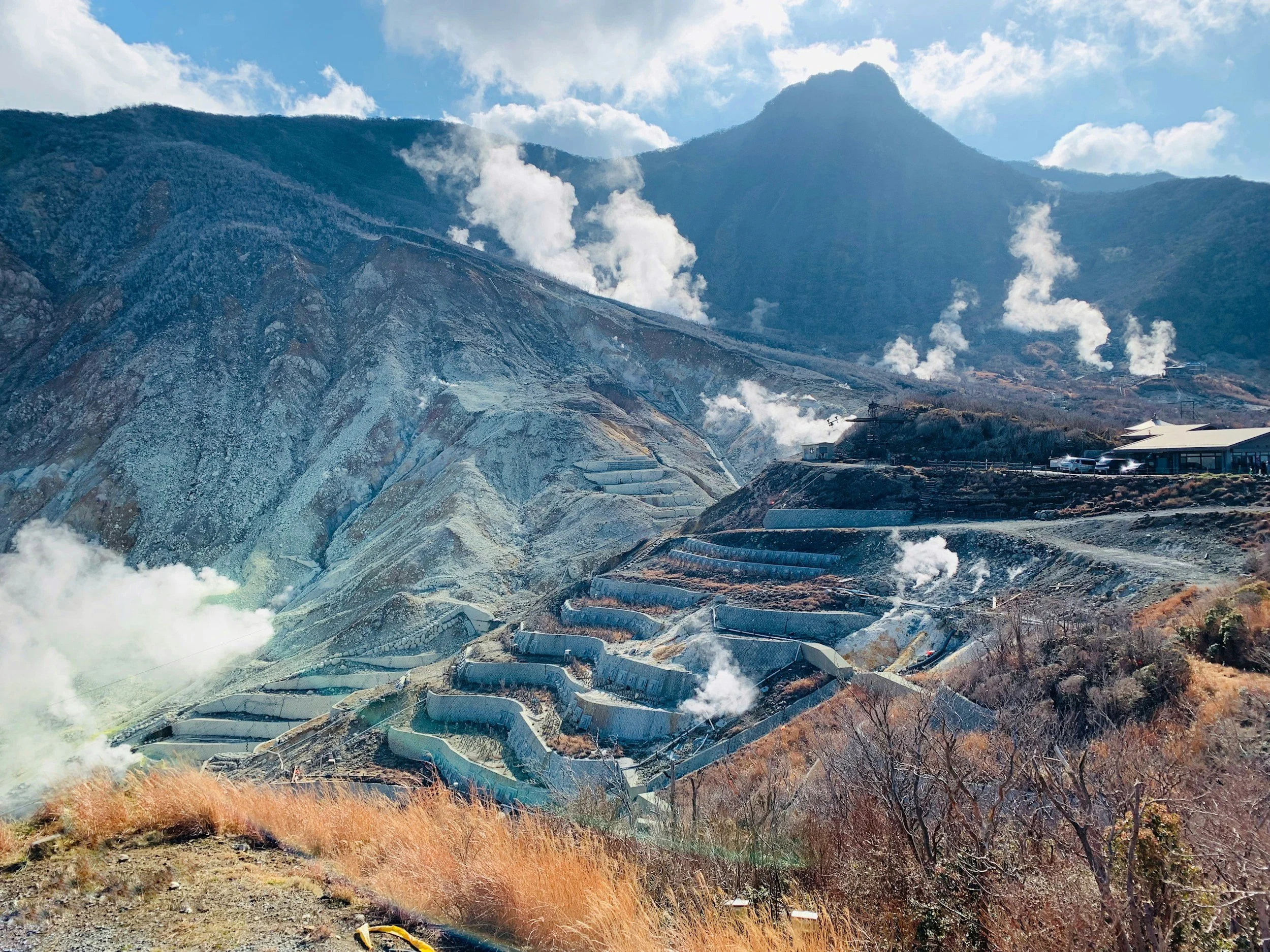
Hakone sits inside the caldera of a volcano that is still actively venting steam. That's not trivia — it's the entire reason the hot spring water is there, and why this specific valley has been where Tokyo goes to recover for centuries. During the Edo period it was a checkpoint on the Tokaido highway between Edo and Kyoto, so travelers have been stopping here to rest for roughly four hundred years.
It's about 35 minutes from Tokyo Station to Odawara by Shinkansen, then a switchback mountain railway up into the valley. On a clear day, Mount Fuji is directly in front of you.
Is it worth a night? For most travelers on a first Japan trip, yes — and specifically two nights, not one. One night means you arrive, eat, sleep and leave, and you'll have paid ryokan prices for a hotel stay. The second day is when the valley actually opens up, and the second evening in the bath is when people stop checking their phones.
Where it fits: Hakone is located between Tokyo and Kyoto. We suggest adding it in early in a trip rather than at the end; jet lag peaks around day three or four, and that's exactly when an onsen retreat does its best work. More on that in our 10-day Japan itinerary.
What a ryokan actually is (and what surprises people)
A ryokan is a traditional Japanese inn. It is not a hotel with tatami mats. The differences matter because a few of them catch first-timers off guard.
Dinner and breakfast are included, and they're the point. A multi-course kaiseki dinner is a substantial part of what you're paying for — seasonal, regional, often a dozen small courses. This is also why ryokan rates look shocking next to a city hotel: you're buying two serious meals per person per night. It’s typical to stay at a ryokan for 1-2 nights at most, since dinners don’t change dramatically, and too many kaiseki dinners can feel overwhelming. That said, many ryokans now offer optional breakfast and dinner, so you don’t necessarily have to eat at your ryokan every night.
Check-in and dinner times are fixed, and earlier than you expect. Arrive by mid-afternoon. Dinner is typically served in a set window in the early evening. You must let your hosts know if you’re planning to be late or not show up for dinner since they will have purchased ingredients for you specifically.
You can wear a yukata. Provided, and worn throughout the property, including to dinner. Nobody is looking at you.
Shoes come off at the entrance. Does not just apply to your room, but for restaurants and common spaces as well.
Communal baths are nude and gender-separated. No swimwear. Wash thoroughly at the seated showers first; the bath is for soaking, not cleaning. Tattoos are still an issue at some traditional properties, though this is easing — if you have visible tattoos, just cover them up. Many ryokans offer private baths where you will not need to cover up your tattoos.
Rooms often have no lock, and staff enter to lay out bedding. Futons are set out on the tatami while you're at dinner. Some travelers find this magical, some find it intrusive. Worth knowing which you are before you book.
If any of that sounds like too much: book a property with a private open-air bath attached to your room. You get the whole experience with none of the communal-bathing question. Several options below.
Gora Kadan: the one everyone recommends
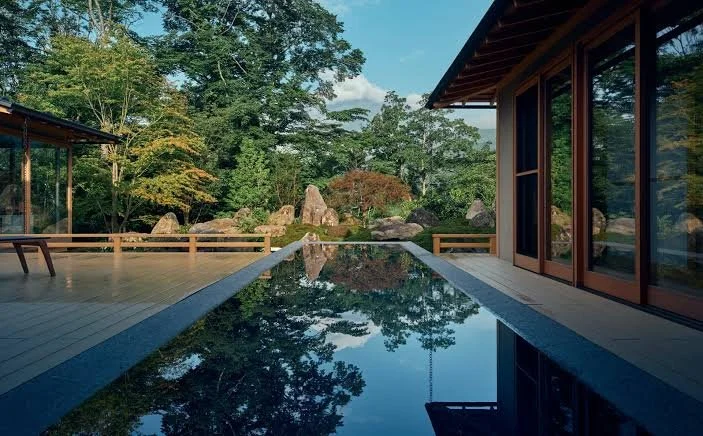
Gora Kadan, photo courtesy of the hotel.
Gora Kadan is the benchmark, and its reputation is earned. It stands on the former site of an imperial family retreat in Gora, the architecture is properly traditional, the service is the reference standard for Japanese hospitality, and rooms with private open-air baths let you soak looking at the mountains with no one else present.
If you can get it, and the rate works for you, book it.
The honest problem:
It sells out, badly, and earlier than you think. Autumn color and cherry blossom season can be gone as soon as rooms become available. Weekends go first. If you're planning inside a six-month window for peak season, work on the assumption it's unavailable and be pleasantly surprised.
It's also genuinely expensive — several times a normal hotel night, because two elaborate meals are built into the rate. Worth it for the right traveler on the right night. Not automatically worth it because it's the famous one.
And it isn't right for everyone. It's quiet, formal, and adult. Traveling with young kids, or wanting a loose evening and a late dinner, you may enjoy one of the alternates below more, regardless of Gora’s availability.
What most people do next, and why it's a mistake
They open a booking site, sort Hakone by rating, and take whatever has rooms. That's how you end up in a business hotel with a shared bath, wondering why the ryokan night everyone raved about felt flat.
The valley has a deep second tier. Here it is.
Alternate ryokans and hotels we love in Hakone
ESPACIO The Hakone Geihinkan Rin-Poh-Ki-Ryu
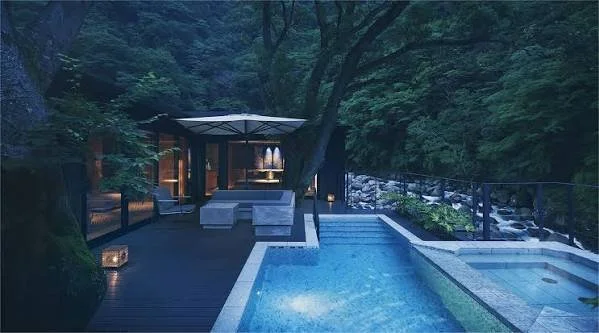
ESPACIO, photo courtesy of the hotel.
Beautiful, with exceptional service and a real sense of being folded into the mountains. The closest in spirit to Gora Kadan on this list. We love the serene feel of the property, the beautiful views, and the thoughtful design. It’s location in a secluded valley in the Miyanoshita area makes entering the property extra special; the hotel is reachable only via a private resort monorail descending 100 meters into the forest.
Note that the ESPACIO allows guests 12 years and older, so keep that in mind as you plan your trip.
Book this if you wanted Gora Kadan for the service and the seclusion specifically, and you're not willing to trade down on either.
HOTEL THE MITSUI HAKONE — opening December 15, 2026
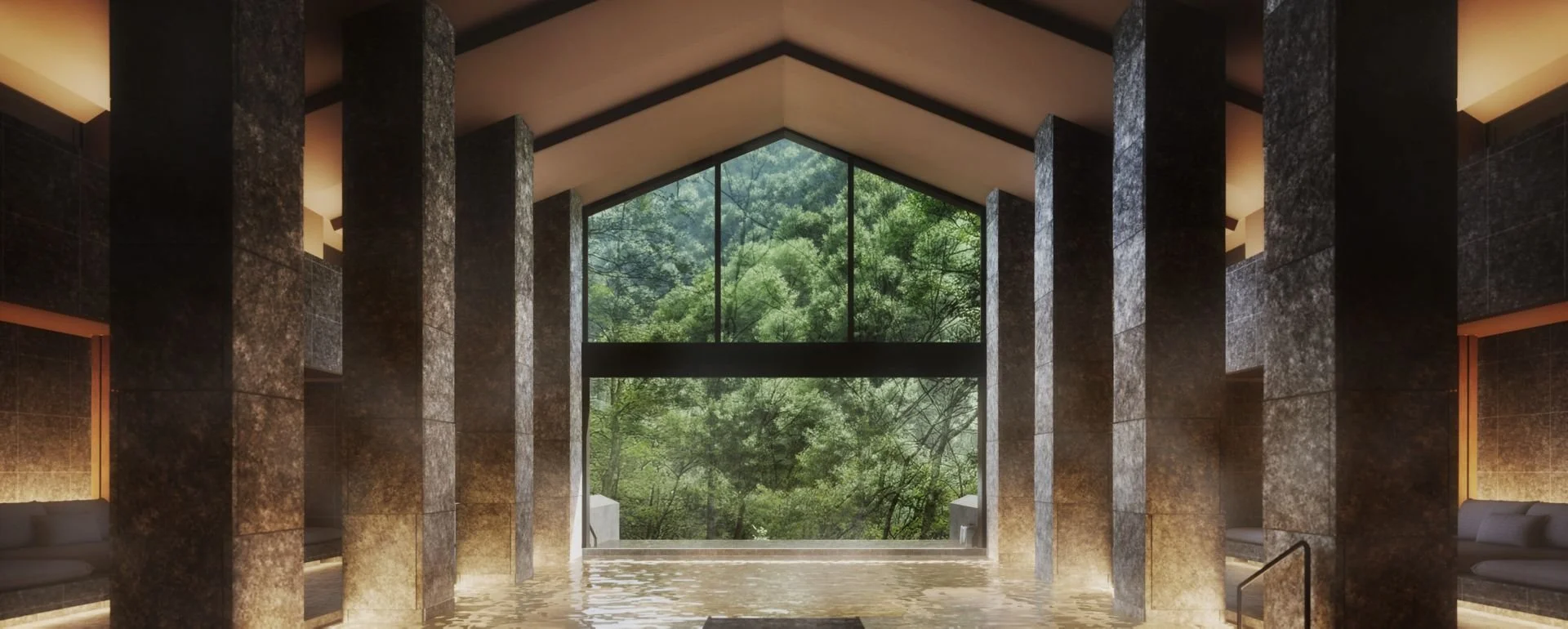
HOTEL THE MITSUI HAKONE, photo courtesy of the hotel.
The opening we're watching most closely, and the one we think reshapes this list.
It's set inside Fuji-Hakone-Izu National Park, which changes what you see out the window: gorgeous, protected landscape transport you to a quiet, remote natural surroundings. It's the second property in the Mitsui hotel brand, following HOTEL THE MITSUI KYOTO, which holds three MICHELIN Keys and is our gold-standard recommendation in Kyoto. Mitsui Fudosan is positioning this as the group's flagship luxury resort, and it arrives as a Luxury Collection property (which is part of the Marriott family).
Reservations opened in July 2026, ahead of the December 15 debut.
Book this if: the setting is what you came for, you like being early to something, and a brand-new property doesn't make you nervous. If you're staying at HOTEL THE MITSUI KYOTO later in the same trip, doing both is a genuinely coherent way to structure a Japan itinerary.
Be aware: it hasn't opened yet, but we’re recommending it on the strength of the brand's Kyoto property, the site inside the national park, and what Mitsui has committed to. Opening months at any hotel carry some settling-in risk. If you need a known quantity for a milestone trip, book Gora Kadan or ESPACIO and let someone else go first. If you'd rather be among the first people through the doors, this is the most interesting room in Hakone this winter.
A note on timing: early availability at a high-profile opening tends to go through advisor and preview channels before it surfaces publicly. If these dates matter to you, this is worth a conversation rather than a booking form.
Hotel Indigo Hakone by IHG
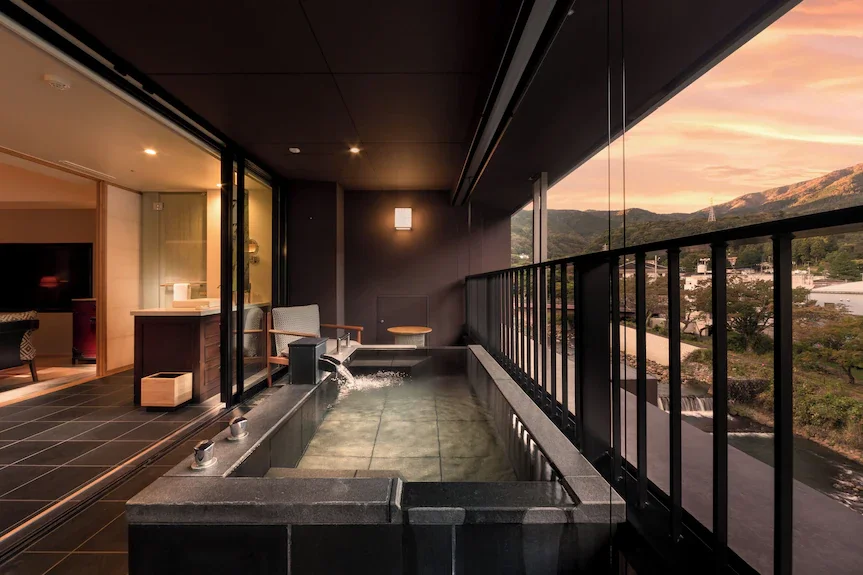
Hotel Indigo Hakone by IHG, photo courtesy of the hotel.
The mid-range pick that punches well above its price. A private onsen in every room — which is the single feature most travelers actually want and don't realize they can get at this price — plus river or mountainside views.
Book this if: you want the Hakone experience without the top-tier rate, you're traveling with kids, you'd rather not use a communal bath, or you want a slightly more relaxed evening than a formal ryokan provides.
This is also our answer to the most common question we get: "is there a version of this that doesn't cost as much as our flights?" Yes. This one.
How to choose
For the definitive traditional experience: Gora Kadan
Service and seclusion, Gora Kadan unavailable: HOTEL THE MITSUI HAKONE (from Dec 2026)
The view and the natural setting: HOTEL THE MITSUI HAKONE (from Dec 2026)
Being first into a major new opening: HOTEL THE MITSUI HAKONE (from Dec 2026)
A proven, no-risk milestone trip: Gora Kadan or ESPACIO — not a brand-new property
Private bath without the top-tier rate: Hotel Indigo Hakone
Traveling with children: Hotel Indigo Hakone
Romantic honeymoon: HOTEL THE MITSUI HAKONE or ESPACIO
You'd rather not use a communal bath: Any of the above with a private open-air bath — ask us
A chance at Mount Fuji from the property: Ask us — this depends on exact room and sightline, and is worth getting right
On Mount Fuji specifically: the mountain is visible far less often than photographs suggest, and whether you see it from a given property depends on the specific room, the sightline, and the weather. If this is a priority, it's worth having someone who knows the actual room inventory book it rather than gambling.
When to go
Autumn (late October–early December) is the valley at its best — maple color against the mountains, steam off the baths in cold air. Also the hardest time to get a room. Book 6+ months out.
Winter is quietly the best value and, for a lot of people, the best experience. Snow on the mountains, an outdoor bath in freezing air, far fewer visitors, better rates and better availability. Underrated — who doesn’t love a hot outdoor onsen during the winter?
Spring (late March–early April) brings blossoms and the biggest crowds. Would not recommend traveling at this time unless you HAVE to see the cherry blossoms.
Summer is humid but green, and the Lake Ashi side stays cooler than Tokyo.
Whatever the season: weekends and Japanese public holidays can be harder to book rather than the specific month. A Tuesday in peak autumn is often easier to book than a Saturday in the off-season.
What to do with your day
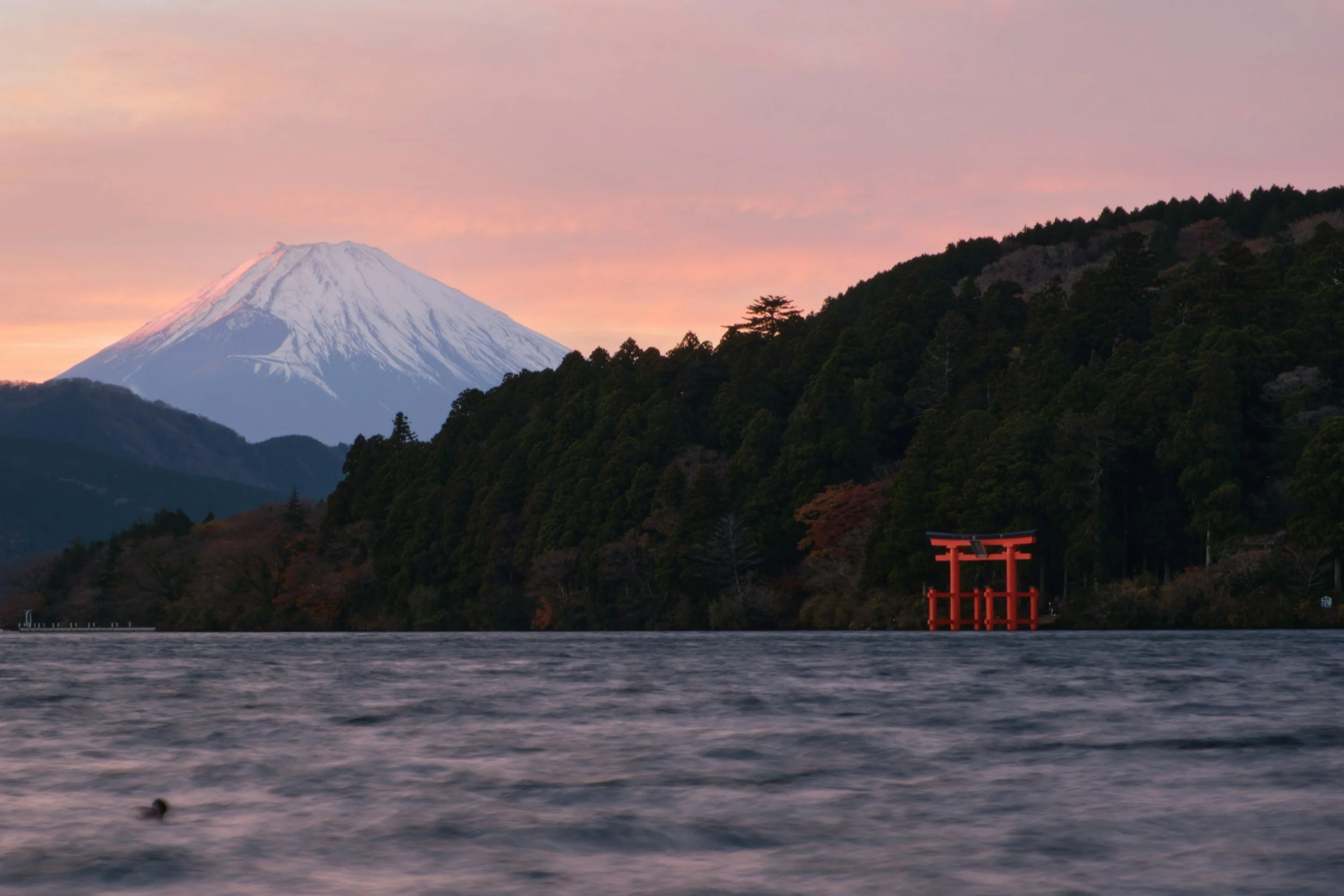
Two nights gives you one full day. Run it as a loop, in this order:
Hakone Ropeway first, over the sulfur vents at Owakudani
Lake Ashi cruise from Togendai
Hakone Open-Air Museum on the way back toward Gora
Back in the bath before dinner
Why this order: Fuji is most likely visible early in the day as clouds build through the day and your odds drop by afternoon. The ropeway is where you'd see it, so it goes first while the sky is still cooperating. It also runs the circuit in one direction instead of doubling back, and the Open-Air Museum sits a stop from Gora so it lands naturally at the end.
Booking Hakone through us
Ryokan availability cam be tricky, and the properties above don't all release inventory the same way. Some hold rooms outside the online channels, and the good rooms at the good properties go long before the dates look "full" on a booking site.
What we do:
Tell you honestly what's gettable for your dates before you fall in love with something that isn't.
Match the property to how you actually travel, whether that’s with kids, with tattoos, with a strong preference against communal baths, with one person who wants tradition and another who wants a comfortable bed, or something else.
Get the right room, not just the right hotel. At a ryokan the room is the product: private bath or not, which view, which building. Two rooms at the same property are not the same stay.
Preferred partnerships. We hold preferred status with luxury hotels worldwide, which typically means a room upgrade when available, breakfast, a property credit, or early check-in at the same rate you'd pay booking direct.
Handle the parts that go wrong. The ropeway closes for wind and volcanic activity more often than people expect. Plans need to flex.
Hotel bookings are free; we make the reservation, you get the perks. Full custom itinerary planning starts at $450, and includes your whole Japan routing rather than just the Hakone night.
See how Hakone fits into a full 10-day Japan itinerary →
FAQ
What's the best ryokan in Hakone? For now, Gora Kadan is the consensus answer and it deserves the reputation — a former imperial family retreat, traditional architecture, and rooms with private open-air baths. But it sells out months ahead, especially in autumn and blossom season. ESPACIO is the closest alternative in spirit, and Hotel Indigo Hakone is the best value, with a private onsen in every room. From December 15, 2026, HOTEL THE MITSUI HAKONE joins the top tier, set inside Fuji-Hakone-Izu National Park.
What new hotels are opening in Hakone? HOTEL THE MITSUI HAKONE opens December 15, 2026 — the second property in the Mitsui hotel brand after HOTEL THE MITSUI KYOTO, set inside Fuji-Hakone-Izu National Park, and positioned as Mitsui Fudosan's flagship luxury resort. Reservations opened in July 2026. It's the most significant addition to Hakone's luxury hotel landscape in years, and worth knowing about if you're planning a 2027 trip.
How much does a Hakone ryokan cost? Can be considerably more per night than a city hotel, because a multi-course kaiseki dinner and breakfast are included in the rate — you're buying two serious meals per person alongside the room. Rates vary widely by season, day of week and whether the room has a private bath. Peak autumn and blossom season carry real premiums.
Can I get a ryokan with a private onsen? Yes, and if communal bathing gives you pause, you should. A private open-air bath attached to your room gives you the full experience with none of the awkwardness. Hotel Indigo Hakone has one in every room; the higher-end properties offer them on specific room types, which is why booking the right room matters as much as the right property.
How many days should I spend in Hakone? Two nights. One night is doable, but it often means you arrive, eat, sleep and leave and miss the full enjoyment of the ryokan.
Is Hakone worth visiting? For a first Japan trip, yes. It's the one place on a standard Tokyo–Kyoto route where you can get out into nature, and it fits naturally between the two anchor cities. If you strongly dislike communal bathing and won't book a private bath, or you're moving very fast with young children, it's a fair thing to cut.
Do I need to be naked in the onsen? In the communal baths, yes — no swimwear, and they're gender-separated. Wash at the seated showers first. If that's a dealbreaker, book a room with a private open-air bath instead.
Are tattoos a problem at a Hakone ryokan? At some traditional properties, still yes, though it's easing. It's an easy problem to avoid: tell us and we'll book somewhere it won't be an issue, or somewhere with private baths. Alternatively, it’s very easy to go to your local pharmacy and buy covers to cover your tattoos.
What about Mount Fuji — will I see it? Less often than photographs imply. Visibility is genuinely weather-dependent and best in the early morning and in the colder months. Whether you can see it from your property depends on the specific room and sightline, so if it's a priority, let us know and we can help you navigate.
How do I get from Tokyo to Hakone? Shinkansen from Tokyo Station to Odawara, about 35 minutes, then the Hakone Tozan Railway up into the valley — it climbs by switchback, reversing direction three times, and it's genuinely part of the experience. The Odakyu Romancecar from Shinjuku is the more famous option but takes roughly 90 minutes.